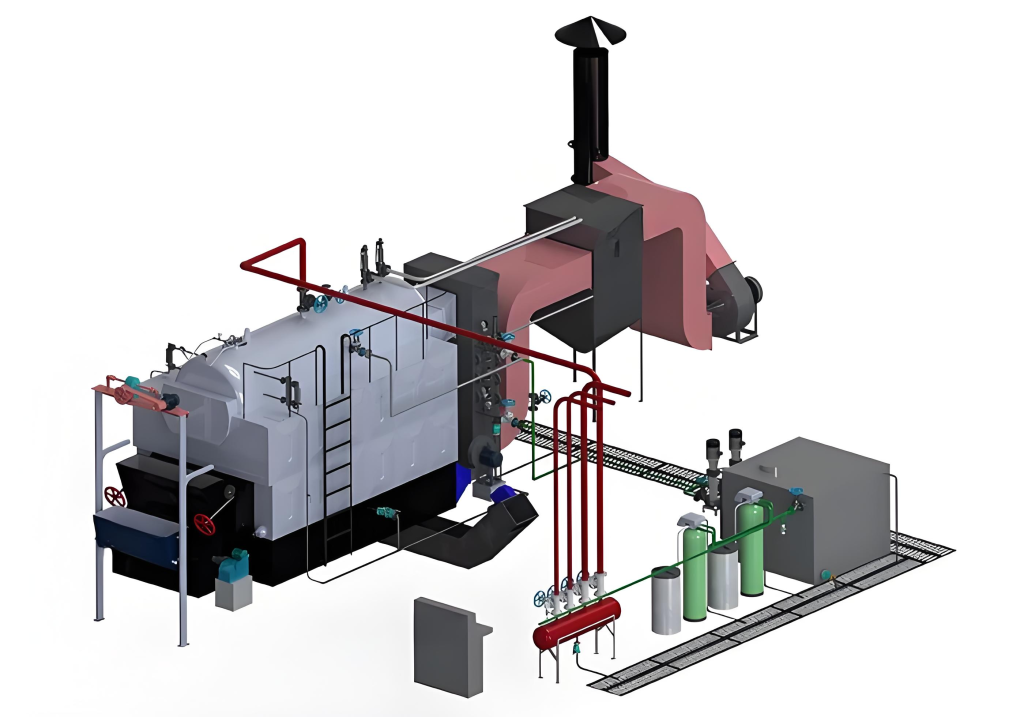
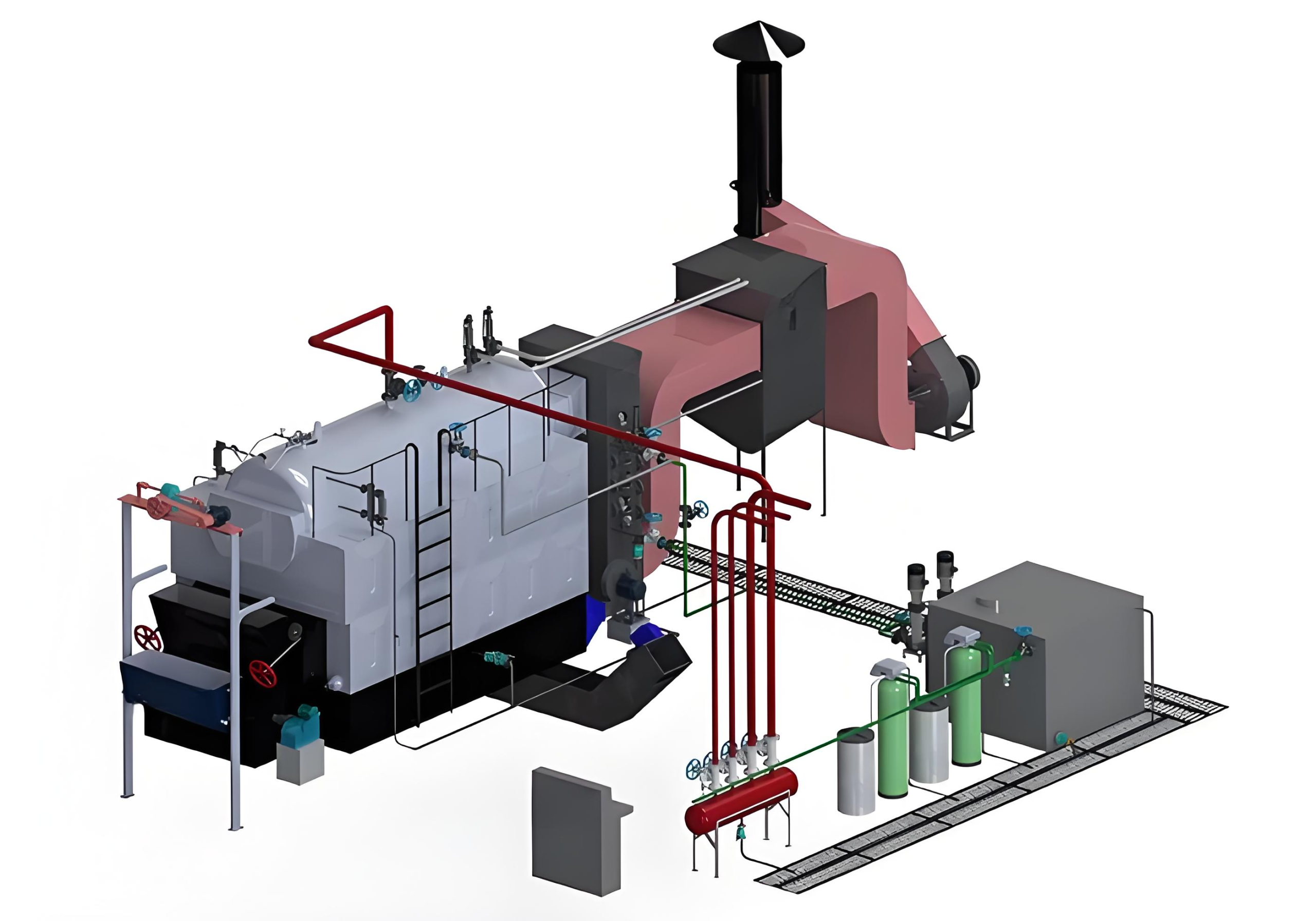
Thermal oil degrades silently. There is no colour change visible through a sight glass, no pressure rise to warn anyone, and no obvious symptom until the heat transfer coefficient drops, the pump starts cavitating or a coil tube fails. Most thermal oil system failures trace back to oil that was never tested, a filter that was never changed, or a leak that ran for months at a flange nobody looked at.
How oil degrades
Mineral oils are rated for bulk temperatures up to about 300 °C, synthetic aromatic oils to 350 °C. Above the rated film temperature the hydrocarbon chains crack, forming lighter fractions and carbon. The light ends lower the flash point and raise vapour pressure. The carbon deposits on the hottest surface, which is the coil inner wall, and insulates it, raising the wall temperature further. The process accelerates: a 10 °C rise above the design film temperature can halve oil life. Oxidation, from air ingress through a low tank level or a failed nitrogen blanket, produces acids and sludge that thicken the oil and block filters.
Oil testing: what to measure and when
| Test | Typical new oil | Action limit | Consequence if ignored |
|---|---|---|---|
| Viscosity at 40 °C | 30 to 46 mm2/s | 15% above baseline | poor flow, low heat transfer |
| Flash point, closed cup | 180 to 220 °C | below 170 °C | fire risk from light ends |
| Total acid number | below 0.1 mg KOH/g | above 0.5 | corrosion and sludge |
| Carbon residue | below 0.05% | above 0.5% | coil fouling and hot spots |
| Water content | below 200 ppm | above 500 ppm | foaming, cavitation, pressure spikes |
| Insolubles | below 0.1% | above 0.5% | filter blocking |
Sample from a circulating point at operating temperature, not from the expansion tank where the oil is stagnant and cooler. Take the first sample at commissioning as a baseline, then every six months for the first two years, and annually afterwards if results are stable. Keep the reports: the trend matters more than any single number.
Filters, strainers and the cold start
A thermal oil loop should have a strainer on the pump suction and a filter on the return line, typically 40 to 100 mesh. Differential pressure across the filter is the useful measurement: a rise of 0.05 MPa indicates loading, and 0.1 MPa means change the element. Never bypass a filter to keep running; the carbon it captures is exactly what abrades seals and blocks the coil. On cold start, oil viscosity is high and the pump may cavitate if the loop is brought up too fast. A controlled warm-up of 20 to 30 °C per hour, with the bypass open until the loop reaches 100 °C, drives off water and lets the oil thin before full flow is demanded.
Leak checks and the places leaks appear
Thermal oil leaks are usually found as a dark sticky residue at flanges, valve stems and pump seals, or as a gradual loss of expansion tank level with no visible puddle. Walk the loop monthly and look specifically at flange joints on the hot side, pump mechanical seals, instrument tappings, the coil outlet header and any welded branch. A leak on the hot side of a flange may carbonise and self-seal temporarily, which is worse than a steady drip because it hides the defect. Oil soaked into insulation is a fire risk; replace contaminated lagging rather than painting over it.
- Record expansion tank level weekly and watch the trend, not the absolute value.
- Inspect hot-side flanges at every shutdown, with insulation lifted where accessible.
- Check the pump seal drain and look for oil mist at the coil outlet.
- Verify nitrogen blanket pressure monthly on blanketed systems.
Expansion tank, venting and water ingress
The expansion tank is the lungs of the system. Level should be 30 to 70% at operating temperature, with an alarm at 20% and a trip at 10%. A level that rises without top-up means water is entering, often from a leaking user-side heat exchanger where process water is at higher pressure than the oil, or that the oil is cracking and generating light ends. Water in oil shows up as pump noise, pressure fluctuation and a water content result above 500 ppm. The cure is to find the exchanger leak, not to vent the tank. Vent lines must go to a safe location and must never be capped, because the tank has to breathe as the oil expands.
An annual maintenance plan that works
| Interval | Task |
|---|---|
| Weekly | Expansion tank level and pump suction pressure recorded |
| Monthly | Leak walk of hot-side flanges, seals and headers; filter differential pressure |
| Quarterly | Pump coupling and seal inspection; burner combustion check |
| Every 6 months | Oil sample for viscosity, flash point, acid number, water and insolubles |
| Annually | Coil external cleaning, flue gas path inspection, safety interlock test |
| Every 3 to 6 years | Full oil replacement based on the test trend, not the calendar |
Oil replacement is a decision for the test results, not the calendar. An oil that holds viscosity, flash point and acid number inside limits at year six is better than fresh oil of the wrong grade. XBOILER COMPANY supplies thermal oil heaters with the expansion tank, pump set and controls matched to the loop volume, and our engineers will review oil test reports against the original fill specification when a system is being assessed for continued service.