Pulp and paper mills run the most demanding steam duty in light industry: continuous, high volume, and intolerant of interruption. A paper machine that loses steam pressure for ten minutes produces broke, damages felts and can take hours to bring back on specification. Boiler selection for a mill is therefore a reliability exercise first and an efficiency exercise second.
Two heat carriers, two purposes
| Section | Medium | Condition |
|---|---|---|
| Digester, chemical pulp | Steam | 8-12 bar(g), 170-190 °C |
| Black liquor evaporators | Steam | 3-10 bar(g), multiple effects |
| Paper machine dryer section | Steam | 3-10 bar(g), 140-180 °C |
| Yankee cylinder, tissue | Steam | 8-12 bar(g), up to 190 °C |
| Calender rolls | Thermal oil | 200-300 °C at 3-6 bar |
| Coating dryers and hot pressing | Oil or steam | 180-250 °C |
How much steam a mill needs
Integrated mills consume 2 to 5 tonnes of steam per tonne of paper. The lower figure applies to modern recycled mills with gas-fired dryers and efficient pressing; the upper figure to older integrated plants with on-site pulping and less efficient water removal. A 300 t/d recycled containerboard mill therefore needs 30 to 60 t/h of steam, usually split across two or three boilers so that one can be offline for inspection without stopping the machine. Tissue mills are more steam-intensive per tonne because of the Yankee hood and cylinder, and their demand is less flexible.
Fuel strategy
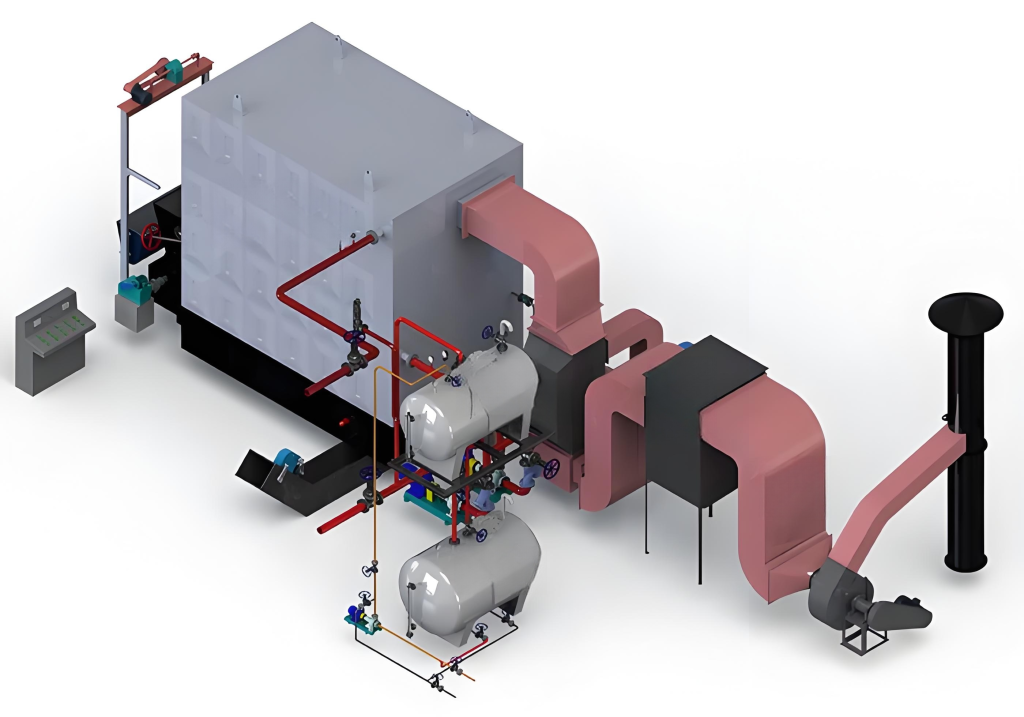
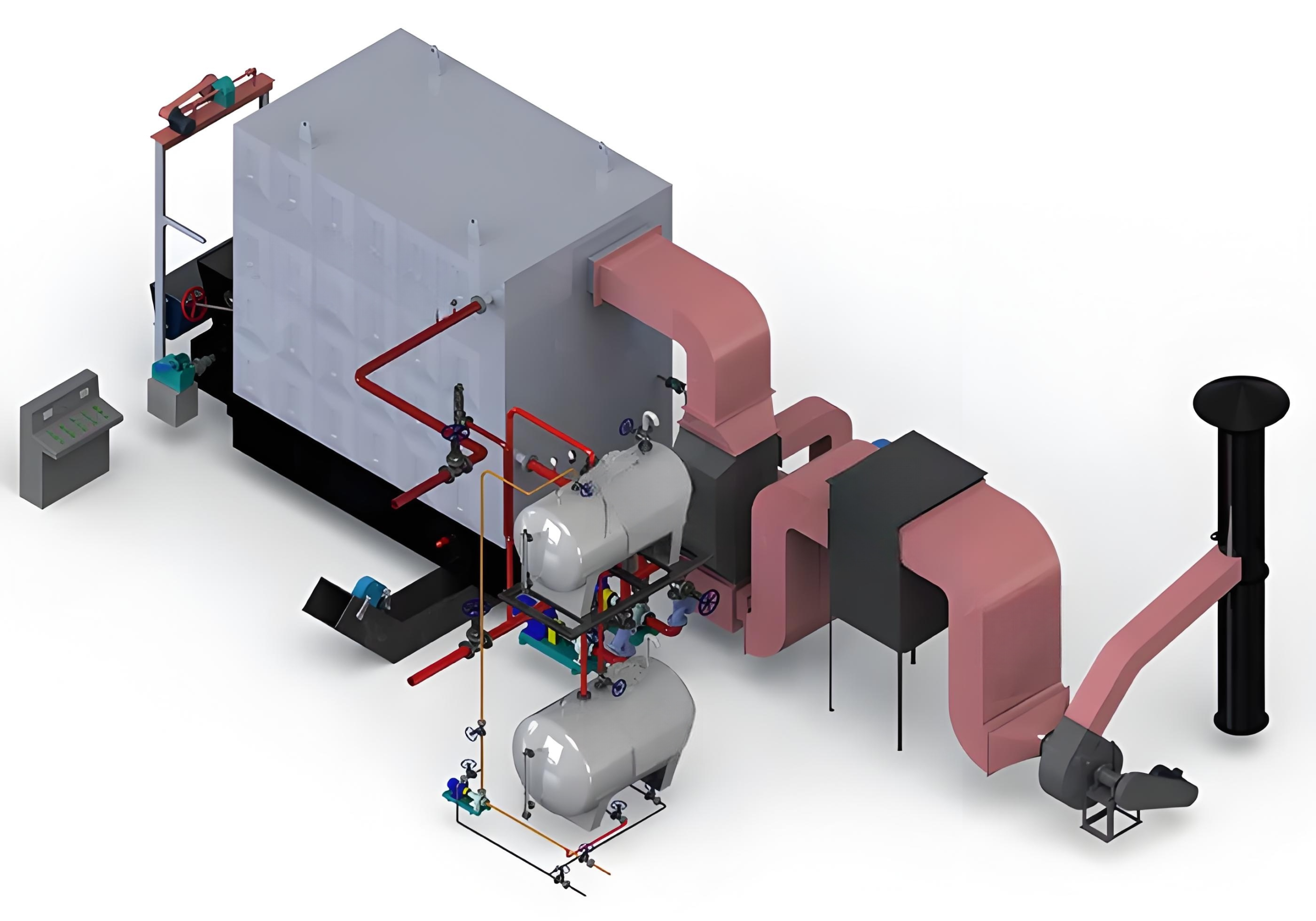
Paper mills are unusual in having a fuel they must dispose of anyway. Bark, sawdust, reject fibre and, in integrated mills, black liquor are burned in biomass or recovery boilers, and the steam they produce is the cheapest in the plant. Coal or gas covers the balance and carries the peaks. A practical arrangement is a biomass boiler sized at 60 to 70 percent of base load with a gas or coal boiler for peak and standby. Multi-fuel burners that run gas and oil are useful where supply security is uncertain, and they cost far less than a second boiler.
Dryer section control
The dryer section consumes the largest share of steam, and its control is where efficiency is won or lost. Steam enters at 3 to 10 bar and condensate leaves through siphons and blow-through lines. Three-element control on the main header, differential pressure control across the machine and thermocompressors that reuse flash steam from condensate tanks together reduce live steam demand by 5 to 12 percent. Wet-end and dry-end sections are controlled separately, because the moisture profile changes faster than header pressure. Blow-through steam that is simply vented is a common and expensive habit.
Water treatment at mill scale
Make-up volumes in a paper mill are large, and condensate is often contaminated by fibre and fillers carried over from the dryers. Continuous conductivity monitoring on the condensate return, with automatic diversion to drain above a set point, protects the boiler from deposits that are difficult to remove. Where the mill returns most condensate, feedwater temperature at the economizer can reach 120 to 140 °C, which changes the economizer design point and must be stated in the specification rather than discovered at commissioning.
Thermal oil where steam is awkward
Calenders and some coating dryers need 200 to 300 °C. Steam at that temperature requires 25 to 85 bar and heavy piping, so thermal oil heaters are used instead: the same heat at 3 to 6 bar, with a simpler pressure vessel and no blowdown. The trade-off is a circulating pump, a larger inventory and the need to manage oil degradation, checked by sampling every 6 to 12 months for viscosity, acidity and flash point. A leaking oil circuit near a paper machine is also a fire risk, so welded construction and leak detection matter more than on a steam system.
Reliability rules for a 24-hour plant
- Two or more boilers, each able to carry 60-70 percent of base load
- Feedwater storage for at least 20 minutes at full rate
- Automated blowdown and continuous water quality monitoring
- Spare burner parts and a documented combustion setting for each fuel
- Inspection planned into the annual shutdown, with tube thickness surveys
XBOILER COMPANY supplies steam boilers from 4 to 75 t/h and thermal oil heaters for mill applications, including biomass and multi-fuel units built by selected partner factories in China. Our engineers size the boiler set against the mill heat balance and the inspection schedule, because availability is worth more than a percentage point of efficiency in this sector.