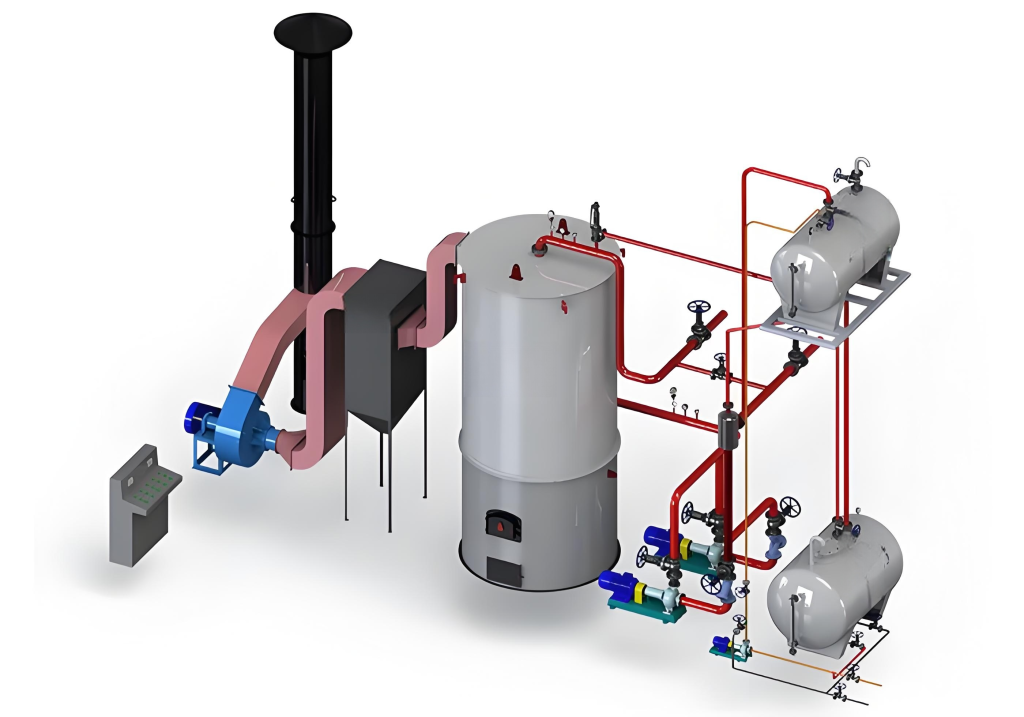
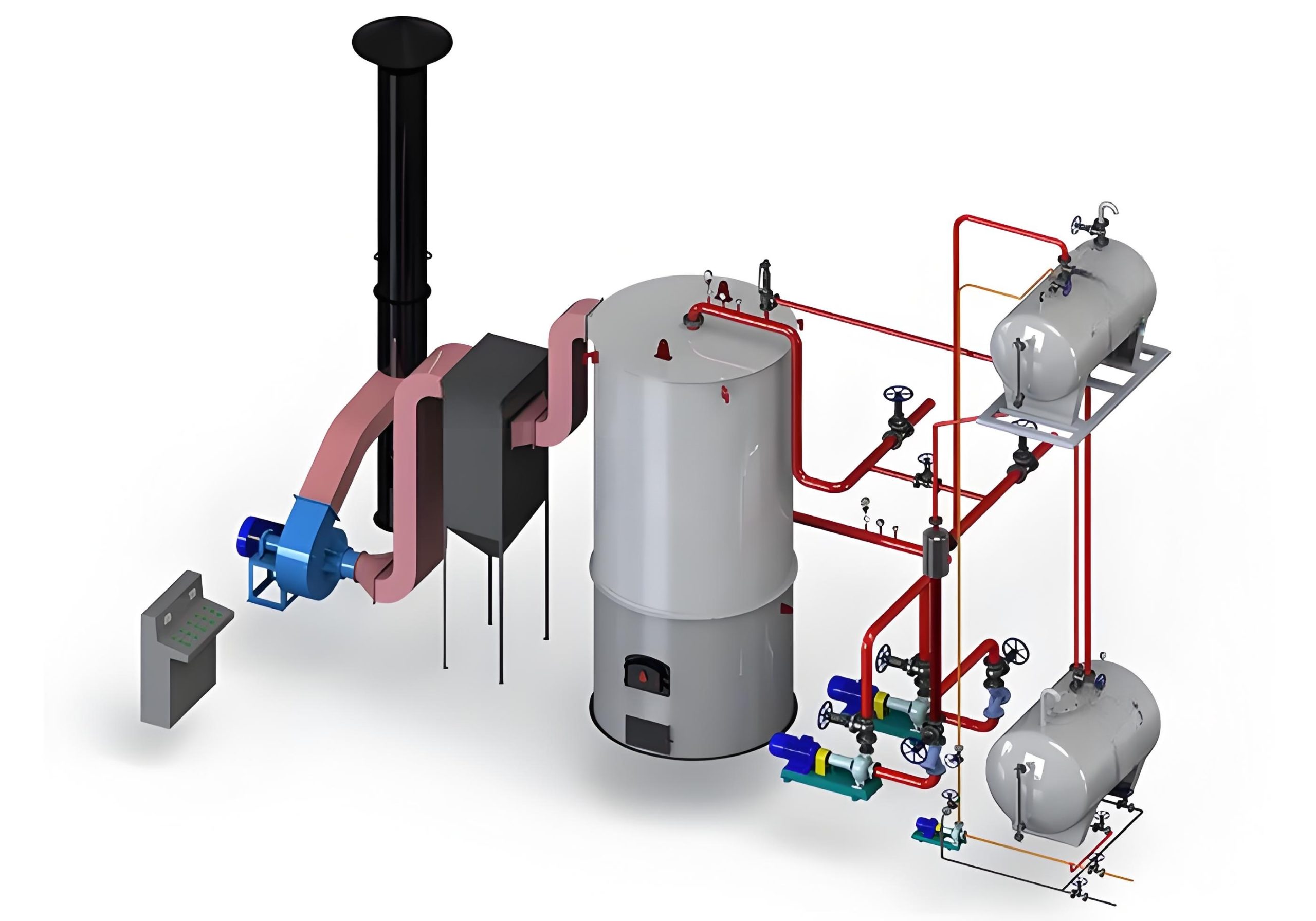
Buying a boiler from China is a project with three distinct phases: manufacturing and testing, documentation and inspection, and movement from factory to foundation. Each has its own failure modes, and most of them are avoidable with a document list agreed before the purchase order is signed rather than argued over at the port.
Documents that define the equipment
The technical file starts with the datasheet: capacity, design pressure, design temperature, fuel, guaranteed efficiency and the design code to be applied. It is supported by a heat balance, a general arrangement drawing with all nozzles and support loads, a piping and instrumentation diagram for the ancillary equipment, and a bill of materials listing pressure part materials and thicknesses. These should be approved before cutting starts, because changes after that point cost both money and schedule. Welding procedure specifications and welder qualification records should also be available for review, particularly where a local inspector will ask for them at registration.
Manufacturing and test records
| Document | Purpose | Issued |
|---|---|---|
| Mill test certificate, EN 10204 3.1 | Chemical and mechanical properties of plate and tube | On material receipt |
| Radiography report | Weld soundness on longitudinal and circumferential seams | During fabrication |
| Ultrasonic or penetrant report | Nozzle and attachment welds | During fabrication |
| Heat treatment record | Post-weld stress relief chart for thick sections | After welding |
| Hydrostatic test report | 1.5 times design pressure hold, witnessed | Before painting |
| Safety valve certificate | Set pressure and rated capacity | Before dispatch |
| Burner test report | Combustion settings and emissions at rated load | Factory test |
| Packing list and weight note | Shipping, lifting and customs | Before dispatch |
Third-party inspection
Independent inspection is arranged through SGS, Bureau Veritas, TUV or a nominated local inspector, working to an inspection and test plan agreed at order. The plan lists hold points, typically material identification, fit-up, radiographic review, hydrostatic test and final painting, at which the inspector must be present before work continues. Witnessing the hydrostatic test and the burner test is standard; a pre-shipment inspection covering marking, packing and quantity is worth the fee on a first order. Certificates should name the inspector, the standard applied and the result, not merely state that inspection was satisfactory, because a registration authority will read them line by line.
Shipping and port handling
Shell boilers up to about 4 t/h usually fit a 40-foot flat rack or an open-top container. Larger units, and any boiler with an economizer or a large furnace diameter, ship as break bulk or on a flat rack with the stack and ancillaries in separate containers. State dry weight and lifting points clearly, and provide a lashing and sea fastening drawing, since a boiler that shifts in heavy weather is a total loss rather than a delay. Marine insurance, usually at 110 percent of invoice value, should be in place before the unit leaves the factory. Typical lead time is 60 to 120 days for manufacture plus 20 to 40 days at sea depending on route.
Spares, commissioning and handover
The document set should include a recommended spares list for the first two years: burner nozzle and electrodes, flame scanner, level electrodes, safety valve spares, gaskets and a set of control fuses. Commissioning support is usually an engineer from the supplying factory for 2 to 4 weeks, and the contract should state who pays for travel, accommodation and any re-test after a fault. Handover documents complete the file: as-built drawings, operating and maintenance manuals in the site language, a combustion setting record for each fuel, and the inspection certificates that the local authority will ask for at registration.
Customs and site arrival
- Certificate of origin, plus a Form E or equivalent where a trade agreement applies
- Commercial invoice, packing list and bill of lading matching the boiler HS code
- Import licence or pre-shipment inspection certificate where the destination requires one
- Foundation and rigging plan approved before the boiler leaves the port
- Local boiler registration and inspection, normally completed before first firing
Allow time for the local inspection before the boiler is needed in production. In many countries the registration visit happens after installation and before first firing, and it can take two to six weeks to schedule. A boiler that arrives on site in week one and is required to run in week three is a schedule risk regardless of how good the paperwork is, and that risk belongs in the project plan rather than in the shipping schedule.
XBOILER COMPANY prepares the full export document set with every order and can arrange third-party inspection by SGS or BV on request. Our engineers review destination import requirements at quotation stage, because registration rules, nameplate language and acceptable design codes vary widely, and all three are easier to meet before fabrication than after the boiler is standing on its foundation.